A lot of public sector work, especially roofing, repairs, electrical and building maintenance, isn’t tendered one job at a time. It is bought through frameworks.
What is a framework?
A framework is an agreement between a buyer and one or more suppliers that sets the terms for contracts awarded later. Getting on the framework doesn’t guarantee work. It puts you on the list the buyer can award contracts, called “call-offs”, to during the framework’s term.
How long do frameworks last?
Under the Procurement Act 2023, most frameworks can last up to four years, or eight for defence and security or utilities frameworks, unless the buyer can justify longer. The Act also brought in open frameworks, which reopen at set points so new suppliers can join, and can run for up to eight years in total. GOV.UK has the detail in its guidance on frameworks.
That matters: if you miss a four-year framework, you may have to wait years for the next chance. With an open framework, keep an eye out for when it reopens.
Lots: bid for what fits
Frameworks are often split into lots by type of work or area, for example “Lot 2: roofing, east of the county”. Bid for the lots that match your trade, size and area rather than the whole thing.
How to get on one
- Watch for the tender notice. Framework tenders are published like any other, on Find a Tender and the other official sites.
- Have your Company Pack ready: insurance, accreditations, policies and examples of similar work.
- Answer the quality questions with evidence. See how to write a method statement.
- Once you are on it, respond quickly to every call-off. Buyers remember who turns work around.
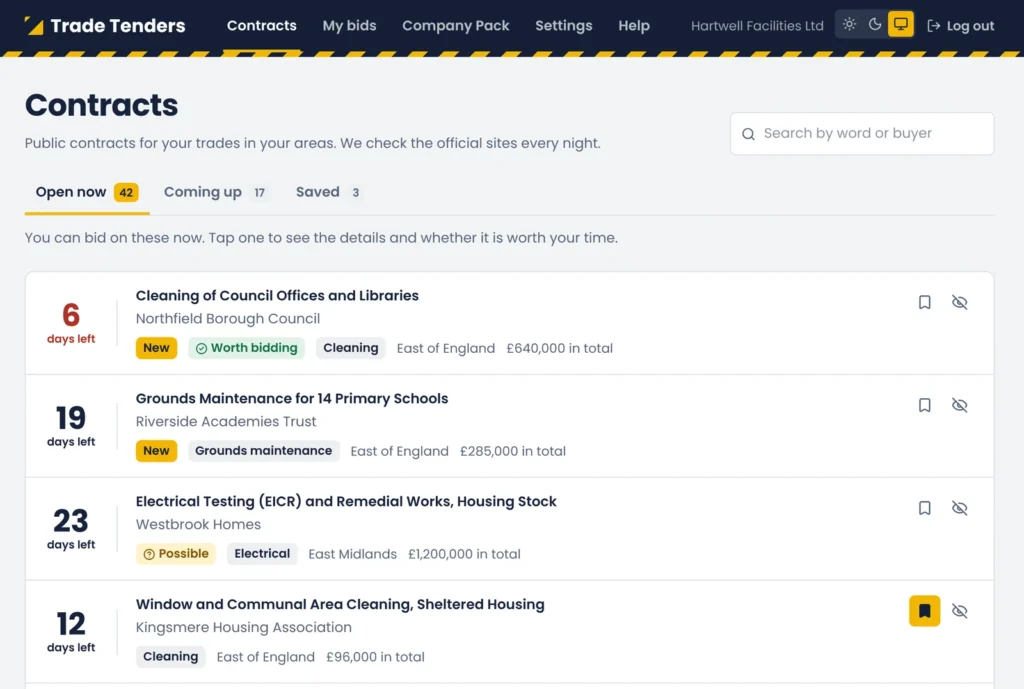
Trade Tenders finds framework tenders alongside one-off contracts and shows which trades and areas each one covers. Roofers in particular see a lot of them: see roofing tenders and frameworks.
How call-offs work
Once a framework is in place, the buyer awards contracts under it. Depending on the framework’s rules, that might be a direct award to a supplier, or a mini-competition between the suppliers on that lot. The framework documents explain which, so read them before you bid: they tell you how you will win work once you are on.
Is a framework worth it for a small firm?
It can be. Being on a framework can mean a steady flow of jobs from a buyer who already knows you, without a full tender each time. But there is no guarantee of work, and pricing is often fixed for the term, so make sure the rates still work for you in year three or four.
Questions to ask before you bid
- How much work has gone through this framework, or the one before it?
- How are call-offs awarded: directly or by mini-competition?
- Can prices change during the term?
- Which lots match your trade, size and area?
You can ask questions like these through the buyer’s portal before the clarification deadline.
Never miss a framework for your trade. Create your free Trade Tenders account. Your first bid is free, and you don’t need a card.